
CBD for Dog Anxiety: What Science Says About Separation and Car Travel

SulisLuna | Science Explained | Veterinary Research
Can CBD for dog anxiety help dogs cope with stressful situations such as being left alone or travelling in a car?
Separation from caregivers and car journeys can be challenging experiences for many dogs, affecting their emotional wellbeing, behaviour and physiological stress responses.
A randomised, blinded, placebo-controlled study published in Frontiers in Veterinary Science in 2023 investigated whether a single administration of cannabidiol (CBD) could influence measurable indicators of stress in dogs.
The findings provide promising insights into CBD and canine stress, particularly in relation to cortisol concentrations and selected behavioural responses during separation and car travel.
Key takeaway:
A scientific study involving 40 dogs found that
a single administration of THC-free CBD was associated
with approximately 28% lower post-test cortisol
concentrations during car travel compared with placebo.
Dogs receiving CBD also displayed less whining and
lower ratings for several stress-related behaviours
during separation.
These findings are encouraging, although further
research is needed to establish their clinical
relevance in companion dogs.
1. CBD for dog anxiety: what does the scientific study reveal?
In February 2023, researchers from the Waltham Petcare Science Institute in the United Kingdom published an original research article entitled:
A single dose of cannabidiol (CBD) positively influences measures of stress in dogs during separation and car travel.
The study, conducted by Hunt, Flint, Logan and King, examined the potential influence of cannabidiol on physiological and behavioural indicators of acute stress in dogs.
Unlike studies relying exclusively on observations reported by pet owners, this investigation combined blood analyses, physiological monitoring, video recordings and structured behavioural assessments.
This combination of objective and observational measurements makes the study particularly interesting for understanding the emerging relationship between cannabidiol for dogs and canine emotional wellbeing.
2. How was the CBD study in dogs conducted?
The researchers enrolled 40 healthy adult dogs, including 17 Labrador Retrievers, eight Beagles and 15 Norfolk Terriers.
The dogs had an average age of 4.1 years and were randomly allocated to a CBD treatment group or a placebo control group.
| Study characteristic | Details |
|---|---|
| Study design | Randomised, blinded, placebo-controlled, parallel-group study |
| Total population | 40 healthy adult dogs |
| CBD group | 20 dogs |
| Placebo group | 20 dogs |
| Separation test | 21 dogs; 45 minutes alone in a familiar room |
| Car travel test | 19 dogs; a standardised 10-minute car journey |
| CBD formulation | Hemp-derived CBD distillate with no detectable THC |
| Experimental dose | Approximately 4 mg/kg body weight, administered orally |
| Assessment timing | Two hours after CBD or placebo administration |
| Publication | Frontiers in Veterinary Science, February 2023 |
The researchers collected physiological and behavioural measurements before, during and after exposure to the stressful situations.
These included serum cortisol, heart rate, heart rate variability, body temperature, physical activity and behavioural indicators such as whining and signs of discomfort.
Scientific context:
The CBD dose and administration timing described
above were part of a controlled research protocol.
They should not be interpreted as general dosing
recommendations for companion animals.
3. Understanding stress and anxiety in dogs
Dogs are social animals that frequently develop strong emotional bonds with their caregivers and other animals.
Being left alone or exposed to unfamiliar environments may trigger behavioural and physiological responses associated with stress.
Common signs of stress in dogs may include:
- Whining, barking or excessive vocalisation.
- Restlessness and repetitive movements.
- Panting or trembling.
- Difficulty settling or relaxing.
- Excessive lip licking or salivation.
- Changes in normal activity and behaviour.
These behaviours are not specific to anxiety. Pain, motion sickness, illness and other factors may produce similar signs.
Why is cortisol important in canine stress research?
Cortisol is a hormone involved in the physiological response to stress. Its concentration can increase when the hypothalamic-pituitary-adrenal (HPA) axis is activated.
Researchers frequently measure cortisol alongside behavioural and cardiovascular indicators to better understand how dogs respond to challenging situations.
However, cortisol is not a standalone measure of anxiety. Its concentration can also be influenced by activity, biological rhythms and other physiological factors.
4. CBD for dogs with car anxiety: promising scientific findings
For some dogs, travelling in a vehicle can be a particularly stressful experience.
Motion, unfamiliar sounds, visual stimulation and motion sickness may contribute to dog anxiety during car travel.
In the 2023 study, car travel produced a more pronounced overall stress response than the separation test.
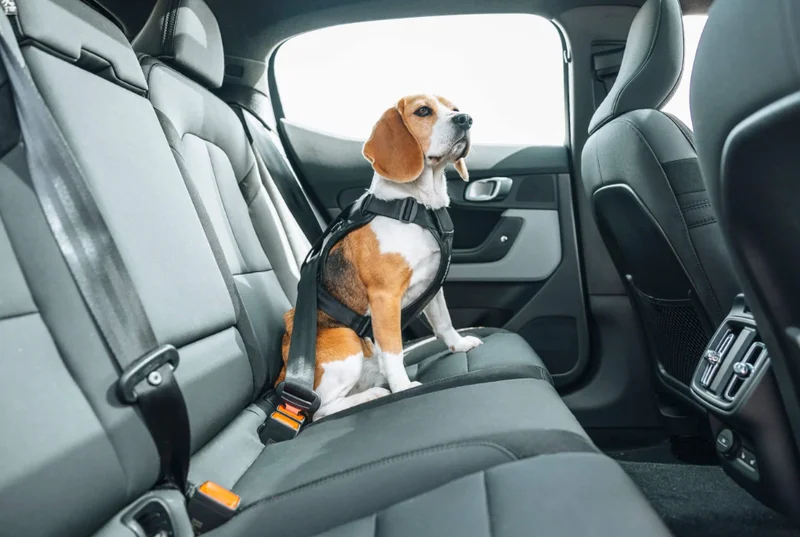
CBD and cortisol concentrations during car travel
One of the most noteworthy findings concerned the relationship between CBD and cortisol in dogs.
Following the car journey, dogs receiving CBD had significantly lower serum cortisol concentrations than dogs receiving placebo.
| Measurement | Placebo group | CBD group |
|---|---|---|
| Baseline cortisol | 22.7 ng/mL | 28.3 ng/mL |
| Post-travel cortisol | 56.7 ng/mL | 40.7 ng/mL |
| Dogs in each group | 10 | 9 |
Approximately 28% lower post-travel cortisol:
Dogs receiving CBD had a mean post-travel cortisol
concentration of 40.7 ng/mL, compared with
56.7 ng/mL in the placebo group.
The difference was statistically significant
(p = 0.034).
The increase in cortisol from baseline was also significantly smaller in the CBD group than in the placebo group (p = 0.017).
These results suggest that CBD may influence selected physiological responses to acute travel-related stress.
The 28% figure represents the difference between the reported post-travel group means. It does not mean that anxiety was reduced by 28% or that every dog experienced the same response.
Behavioural observations during car travel
Dogs receiving CBD were also rated as less sad during the car journey than dogs receiving placebo (p = 0.044).
The reduction in relaxed behaviour from baseline to the car test was significantly smaller in the CBD group (p = 0.033).
These observations provide additional insights into the potential relationship between CBD for dog travel anxiety and selected behavioural responses.
5. CBD for dog separation anxiety: what did researchers observe?
Separation-related distress can be a significant challenge for dogs and their caregivers.
To investigate this situation, researchers observed 21 dogs during a 45-minute period of separation in a familiar environment.
Eleven dogs received CBD and ten received a placebo.
During the separation test, dogs receiving CBD obtained significantly lower behavioural ratings for several characteristics associated with emotional discomfort.
| Behavioural indicator | Observation in CBD group versus placebo | Statistical significance |
|---|---|---|
| Stress | Lower rating | p = 0.014 |
| Tension | Lower rating | p = 0.011 |
| Sadness | Lower rating | p = 0.032 |
| Discomfort | Lower rating | p = 0.028 |
| Whining | Less whining | p = 0.019 |
These behavioural observations are particularly interesting for research into CBD for dog separation anxiety.
They suggest that cannabidiol may influence certain observable responses when dogs experience temporary separation.
Although post-separation cortisol concentrations were numerically lower in the CBD group, the difference was not statistically significant.
Importantly, the dogs had not been recruited because of a clinical diagnosis of separation anxiety. The results therefore relate to experimental separation-related stress rather than an established treatment for a diagnosed behavioural disorder.
6. CBD and canine stress: scientific results at a glance
When researchers analysed both stressful situations together, the mean post-test cortisol concentration was 30.0 ng/mL in the CBD group and 39.3 ng/mL in the placebo group (p = 0.028).
This corresponds to approximately 24% lower post-test cortisol concentrations in dogs receiving CBD.
| Scientific indicator | Key finding |
|---|---|
| Post-travel cortisol | Approximately 28% lower with CBD |
| Combined post-test cortisol | Approximately 24% lower with CBD |
| Separation-related whining | Significantly lower in the CBD group |
| Separation-related behaviour | Lower ratings for stress, tension, sadness and discomfort |
| Travel-related behaviour | Lower sadness rating and smaller decline in relaxed behaviour |
| Heart rate and heart rate variability | No significant treatment effect established |
| Combined overall stress score | No significant treatment effect established |
The findings highlight the value of investigating both physiological and behavioural indicators when studying cannabidiol and canine emotional wellbeing.
The most promising observations were associated with cortisol concentrations during car travel and selected behavioural responses during separation.

7. CBD for stressed dogs: what do these findings mean?
Research into CBD for dog anxiety is contributing to a better understanding of how cannabidiol may interact with physiological and behavioural responses to stressful situations.
The 2023 study is particularly interesting because it identified statistically significant differences in selected stress-related indicators following a single administration of CBD.
The results suggest that the effects of cannabidiol may vary depending on the stressful situation and the specific indicators being measured.
During car travel, the most noteworthy physiological finding was the lower concentration of serum cortisol. During separation, several favourable behavioural differences were observed.

Cannabidiol and the endocannabinoid system in dogs
Cannabidiol is a naturally occurring compound found in the hemp plant (Cannabis sativa L.).
The endocannabinoid system is involved in regulating several physiological processes in mammals.
Scientific research is investigating how CBD interacts with this system and other molecular signalling pathways that may be relevant to stress-related responses.
However, the precise biological mechanisms responsible for the behavioural and physiological observations in this particular study were not established.
A broader approach to canine emotional wellbeing
Supporting canine emotional wellbeing involves understanding the individual needs of each dog, its environment and the circumstances that trigger stressful behaviour.
A comprehensive approach may include:
- Gradual, positive familiarisation with car journeys.
- Appropriate and secure transportation arrangements.
- Predictable daily routines.
- Environmental enrichment and suitable exercise.
- Individualised behavioural support.
- Veterinary assessment when stress is persistent or severe.
Research into cannabidiol represents an emerging area of scientific interest within this broader understanding of canine welfare.
8. Scientific limitations and important precautions
Although the findings are promising, several aspects of the study should be considered when interpreting the results.
- Sample size: The investigation included 40 dogs, with smaller groups for each individual testing scenario.
- Study population: The dogs were healthy research dogs from three breeds, living in a controlled environment.
- Acute stress: The published findings concern a single CBD administration and short-term stressful situations.
- Individual responses: The results do not establish that all dogs respond similarly to cannabidiol.
- Formulation: The researchers used a specific hemp-derived CBD distillate with no detectable THC.
- Statistical power: No advance statistical power calculation was conducted for this investigation.
- Clinical applicability: The dogs were not selected because of diagnosed separation anxiety or travel-related anxiety disorders.
The study was funded by Mars Petcare, and all four authors were employees of Mars Petcare UK. These disclosures are relevant when evaluating the evidence and the need for independent replication.
Further research involving larger populations, companion dogs in home environments and different CBD formulations would help clarify the practical significance of these observations.
Important veterinary information:
CBD should not be considered a substitute for
veterinary assessment, behavioural support
or prescribed medication.
If your dog experiences persistent anxiety,
severe distress or travel-related discomfort,
consult a veterinary professional before
introducing CBD or other supplements.
9. Frequently asked questions about CBD for dog anxiety
Can CBD help dogs with anxiety?
A 2023 placebo-controlled study involving 40 dogs reported favourable differences in selected physiological and behavioural stress indicators following CBD administration.
The findings are promising, but they do not establish CBD as a clinically proven treatment for canine anxiety disorders.
What does research say about CBD for dog separation anxiety?
During a 45-minute separation test, dogs receiving CBD displayed less whining and lower ratings for stress, tension, sadness and discomfort compared with dogs receiving placebo.
Further studies involving companion dogs diagnosed with separation anxiety are needed to establish clinical effectiveness.
What does research say about CBD for dogs with car anxiety?
Dogs receiving CBD in the 2023 study had approximately 28% lower mean serum cortisol concentrations following a short car journey compared with dogs receiving placebo.
Researchers also observed favourable differences in selected behavioural measurements. These findings relate to the specific experimental conditions of the study.
Does CBD reduce cortisol in dogs?
In the study by Hunt and colleagues, dogs receiving CBD had significantly lower post-test cortisol concentrations when both stressful situations were analysed together and when the car travel test was analysed separately.
This suggests a potential influence on selected acute stress responses, rather than a general effect on cortisol under all circumstances.
How quickly was CBD assessed in the scientific study?
The researchers exposed dogs to the stressful situations two hours after administering CBD or placebo.
This was the assessment timing selected for the research protocol. It does not establish a universal onset time or administration schedule for CBD products.
What type of CBD was used in the study?
The researchers used a hemp-derived CBD distillate in oral softgel capsules containing sunflower oil. Laboratory analysis found no detectable THC.
The findings cannot automatically be applied to other CBD formulations, concentrations or commercially available products.
Is THC-free CBD safe for all dogs?
The absence of detectable THC does not guarantee that a CBD product is appropriate for every dog.
Individual health conditions, medication use, formulation and product quality should be considered with a veterinary professional.
Can CBD replace conventional treatment for dog anxiety?
No. Current evidence does not justify replacing veterinary-prescribed medication or established behavioural interventions with CBD.
Any changes to a dog's treatment plan should be discussed with the veterinary professional responsible for its care.
10. Conclusion: CBD and canine emotional wellbeing
The 2023 study published in Frontiers in Veterinary Science provides encouraging insights into the relationship between CBD and canine stress.
The researchers identified favourable differences in several physiological and behavioural measurements following a single administration of cannabidiol.
Particularly noteworthy findings included lower cortisol concentrations during car travel, less whining during separation and lower ratings for selected behaviours associated with emotional discomfort.
These observations contribute to the growing scientific interest in cannabidiol and its potential role in canine emotional wellbeing.
Further investigation will help clarify how these findings translate into everyday situations experienced by companion dogs.
At SulisLuna, we believe that understanding animal wellbeing begins with accessible, transparent and evidence-informed scientific information.
Stay informed with SulisLuna.
Explore the science behind cannabidiol, the endocannabinoid system and the emerging research into human and animal wellbeing.
Discover more at SulisLuna11. Scientific references
Primary scientific study:
Hunt ABG, Flint HE, Logan DW, King T.
A single dose of cannabidiol (CBD) positively influences measures of stress in dogs during separation and car travel.
Frontiers in Veterinary Science. 2023;10:1112604.
Published: 22 February 2023.
Research institution: Waltham Petcare Science Institute, United Kingdom.
DOI: https://doi.org/10.3389/fvets.2023.1112604
Full open-access scientific article: Read the original publication in Frontiers in Veterinary Science
The percentage differences presented in this article were calculated from the post-test group means reported in the original publication. They represent relative differences between group means, not individual clinical response rates.
This article is an educational summary of the original scientific research and does not constitute veterinary advice.
SulisLuna — Science Explained. Evidence-informed content, accessible language and respect for scientific uncertainty.


