Pet Quiz – CBD

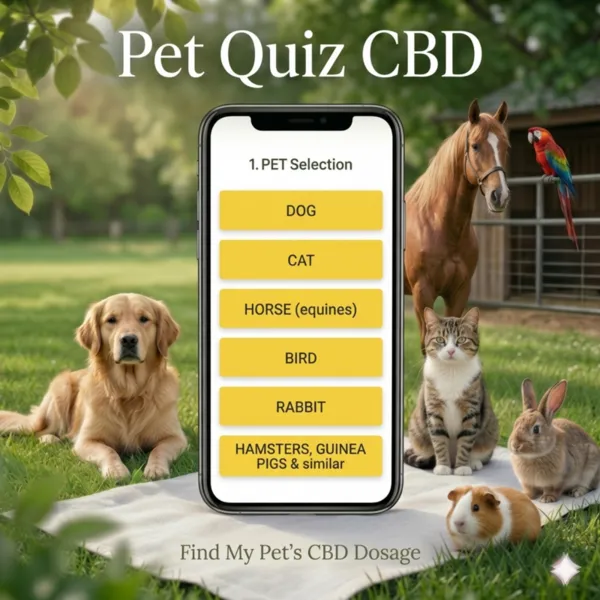
Find the right CBD dose for your pet based on weight and needs
Pet Quiz CBD – Everything You Need to Know
What is the Pet Quiz CBD?
If you’re unsure about the right CBD dosage for your pet, our Pet CBD Quiz helps you find a personalized recommendation quickly and easily.
More than just a calculator, this interactive quiz is designed to assess your pet’s specific needs — including weight, health condition, and behavior — to suggest the most suitable CBD dosage.
Professional Standard: Developed by experts trained in cannabis science and clinical applications, the Pet Quiz CBD is based on recognized methodologies and real-world experience to ensure reliable and safe guidance.
What is CBD?
CBD (Cannabidiol) is a natural compound extracted from the hemp plant. It is one of over 100 cannabinoids found in cannabis and is widely used for its potential wellness benefits.
Unlike THC, CBD is non-psychoactive, meaning it does not cause a “high.” Research suggests that CBD may support both human and animal health by helping maintain internal balance (homeostasis) in the body.
Is CBD Oil Safe for Pets?
Yes. When used correctly, high-quality CBD oil is generally considered safe for pets.
According to the World Health Organization (WHO), pure CBD has a strong safety profile and is well tolerated. To ensure the best results for your pet:
Select Premium Quality: Always choose lab-tested, high-quality CBD products.
Start Low: Begin with a minimal dose.
Monitor & Adjust: Gradually adjust based on your pet’s specific response.
Using the Pet Quiz CBD dosage calculator helps ensure accuracy and significantly reduces the risk of incorrect dosing.
What are the Key Benefits of CBD Oil?
CBD oil may support your pet’s wellbeing in several vital ways:
Pain & Inflammation: Helps manage chronic discomfort and inflammatory responses.
Anxiety & Stress: Supports calm behavior during fireworks, travel, or separation.
Neurological Health: Supports brain function and may help manage seizures.
Behavioral Support: Reduces destructive or stress-related habits.
Skin & Coat: Promotes healthy skin and a shiny coat.
Immune System: Strengthens overall natural defenses and hormonal balance.
Avian Care: Specifically helps with issues like feather plucking in birds.
👉 Try our Pet Quiz – CBD to find the right dosage tailored to your pet’s unique needs.
What Are the Most Important CBD Laboratory Tests?
As CBD products become more popular, transparency, safety and quality control are more important than ever. Independent laboratory testing plays a critical role in ensuring that CBD oil is safe, effective and accurately labelled.
However, not all CBD products are properly tested — and this can significantly impact quality and safety.
Here are the key laboratory tests every high-quality CBD oil should undergo:
1. Potency (Cannabinoid Content) Testing
This test measures the levels of cannabinoids, including CBD and THC, to ensure the product matches the label and complies with legal limits.
Accurate potency is essential for:
Correct dosing
Product effectiveness
Consumer trust
2. Heavy Metal Testing
This analysis detects toxic metals such as:
Lead
Arsenic
Mercury
Cadmium
These contaminants can accumulate in the body and pose serious health risks, making this test essential for safety.
3. Microbiological Testing
This test identifies harmful microorganisms, including:
Bacteria
Fungi
Yeast
It ensures the product is free from contamination and safe for regular use.
4. Pesticide Testing
This checks for chemical residues from agricultural processes, ensuring that CBD oil is free from harmful pesticides and within safe limits.
Why Lab Testing Matters
Third-party lab testing guarantees that CBD oil is:
Safe for pets and humans
Free from harmful contaminants
Accurately labelled
Consistent in quality
👉 All our CBD products are batch-tested to ensure purity, safety and effectiveness.
Pet Quiz CBD - Give the Best to the Best Friend
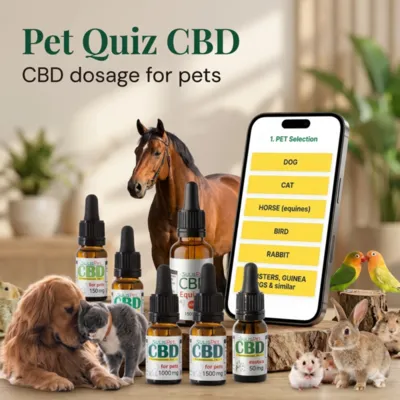
Pet Quiz CBD - Explore the Top 16 Tips
#1 Tip - Pet Quiz CBD: Unique Biochemistry
Pet Quiz CBD – CBD Dosage Guide for Pets: Finding the Perfect Amount
Because every pet has a unique endocannabinoid system, there is no one-size-fits-all CBD dosage. The right amount depends on your pet’s weight, metabolism, and the severity of their symptoms.
To find the safest and most effective dose for your pet, follow this step-by-step method:
- Start Low: Begin with a minimal dose of CBD.
- Observe & Wait: Maintain this dose for 7 days. Monitor your pet’s behavior and symptoms.
- Adjust Gradually: If you do not see satisfactory results after a week, slightly increase the dose and wait another 7 days.
- Maintain: Once you find the dose that provides relief, keep it steady.
⚠️ Important Safety Limit: For dogs and cats, do not exceed a maximum dose of 4 mg of CBD per kg of body weight per day. (For exotic pets and horses, please see Tip #2).
💡 Pro Tip: Keep a daily journal to track your pet’s CBD intake, noting any changes in their symptoms, sleep, or mobility over time.
Recommended CBD Strengths by Pet Type
Our Pet Quiz suggests the following CBD oil concentrations based on the animal:
| Pet Category | Available CBD Strengths |
|---|---|
| Dogs & Cats | 150 mg (1.5%), 300 mg (3%), 500 mg (5%), 1000 mg (10%), 1500 mg (15%) |
| Exotic Pets | 50 mg (0.5%), 100 mg (1%), 150 mg (1.5%) |
| Horses (Equines) | 7500 mg (25%) |
#2 Tip - Pet Quiz CBD: Conditions, Weight, Dosage
Scientific Basis for the Pet Quiz CBD
The Pet Quiz CBD algorithm is built upon dozens of empirical studies, primarily from the USA. These guidelines ensure your pet receives a safe, reference-based dosage for optimal results.
General CBD Dosage Guidelines
For most cats and dogs, the following best practices apply:
Safety Ceiling: Do not exceed 4 mg of CBD per kg/day.
The Cat Factor: Cats typically require higher doses than dogs relative to their weight because they have fewer endocannabinoid receptors.
Dogs & Cats – Dosage by Condition (mg CBD per kg)
Dosage for Anxiety & Stress
Mild/Moderate: 0.5 – 0.75 mg/kg
Severe: 0.75 – 1.5 mg/kg
Dosage for Pain & Inflammation
Mild/Moderate: 1.0 – 1.75 mg/kg
Severe: 1.75 – 3.0 mg/kg
Guidelines for Exotic Pets & Equines
Based on empirical research, observe the following daily maximums:
Birds (Parrots/Parakeets): Up to 10 mg/kg
Rabbits: Up to 20 mg/kg
Hamsters & Guinea Pigs: Up to 50 mg/kg
Horses (Equines): Do not exceed 1.5 mg/kg
#3 Tip - Pet Quiz CBD: How to Administer CBD Oil to my Pet?
CBD oil can be administered directly into your pet’s mouth or mixed with their food (preferably fatty food) and twice daily.
For cats, and only for them, when they have gingivitis and cannot eat, our CBD oil can be applied topically inside the ear on the pinna region, followed by a massage to absorb the oil and enter the bloodstream.
#4 Tip - Pet Quiz CBD: Can CBD Interact with My Pet's Medication?
While CBD is generally safe, it can interact with other drugs. Due to limited clinical studies, we advise caution and recommend consulting your veterinarian before starting a new regimen.
The Science of Interaction:
CBD is processed by the liver’s P450 enzymes (found in the smooth endoplasmic reticulum). Because many other medications use these same enzymes, taking them simultaneously can “clog” the metabolic pathway.
The 2-Hour Safety Rule:
To allow substances to be metabolized individually and safely, follow this best practice:
Administration: Maintain at least a 2-hour gap between CBD and any other medication or supplement.
Verification: Use a professional tool to stay safe.
🔗 Resource: You can check specific interactions using this: drugs interactions checker.
#5 Tip - Pet Quiz CBD: How Long Does It Take for CBD Oil to Work?
The onset and duration of CBD effects can vary depending on each animal. Some may experience benefits within minutes, while others may take a few days to show improvements.
For those using CBD oil for ongoing support or to treat chronic conditions, it is important to allow more time (over 7 days), and maintaining consistent use is crucial.
#6 Tip - Pet Quiz CBD: Are Terpenes Important in CBD Oil?
Terpenes are natural, aromatic compounds found in the hemp plant that do more than just provide a scent. In CBD oil, they act as biological “keys” that help cannabinoids cross the blood-brain barrier, increasing the overall efficacy of the treatment.
When terpenes and CBD work together, they create the Entourage Effect, ensuring your pet gets the maximum therapeutic benefit from every drop.
Our Specialized Terpene Profile:
Alpha-Pinene & Beta-Pinene: Improves mental agility and clarity. Recognized for anti-inflammatory and neuroprotective properties, often used to support pets with epilepsy or chronic pain.
Alpha-Terpinene: A potent antioxidant currently being studied for its potential role in supporting cellular health and cancer treatments.
Anethole: Acts as a natural, anti-inflammatory painkiller with specific anti-tumor activity.
Beta-Caryophyllene: A unique terpene that modulates the immune system. It provides significant anti-inflammatory and analgesic (pain-relieving) support.
Limonene: A natural “mood booster” that activates adenosine receptors. It helps pets with anxiety while offering anti-inflammatory benefits.
Linalool: Best known for its calming effect. It provides anxiolytic (anti-anxiety) and sedative support for nervous or stressed pets.
Terpinolene: A versatile compound with proven antibacterial and anti-tumor properties to support long-term wellness.
Expert Note: For more details on the science behind these compounds, refer to our Pet Quiz CBD – External Sources and Scientific Studies, or read this Analgesic Potential of Terpenes Derived from Cannabis sativa L.
#7 Tip - Pet Quiz CBD: Can CBD Help with Anxiety, Stress, or Separation Issues?
Countless people have reported the positive effects of CBD oil in reducing anxiety and stress.
This information is supported by several clinical studies, including: ” Use of cannabidiol in anxiety and anxiety-related disorders“.
#8 Tip - Pet Quiz CBD: Can I Use CBD Oil for Acute and Chronic Pain?
CBD oil can help manage both acute and chronic pain in pets.
This information is supported by the clinical study published in the Journal of Frontiers in Veterinary Science, titled “The role of cannabinoids in pain modulation in companion animals.”
#9 Tip - Pet Quiz CBD: Is CBD Addictive?
Pet CBD oil is not considered addictive as it does not contain THC, the compound responsible for addiction.
The product solutions suggested by the CBD Quiz contain no THC or levels below 0.01%.
#10 Tip - Pet Quiz CBD: What Are the Possible Side Effects of CBD Oil (Without THC)?
If the dose is appropriate and the CBD oil is of high quality and without THC, possible side effects are very rare, and if they do occur, they are usually mild, potentially including:
– Vomit
– Diarrhoea
Stop administering the Pet CBD oil and contact us if you notice any side effects.
#11 Tip - Pet Quiz CBD: Why Use CBD with Hemp Seed Oil Instead of Olive Oil or MCT Oil?
Hemp seed oil is rich in omega-3 and omega-6 fatty acids and can help reduce inflammation and improve skin and coat health. It is a light, thin oil easily absorbed by the body, which benefits overall health.
Hemp seed oil complements CBD as it comes from the same plant as CBD (Cannabis sativa L.).
Olive oil is not suitable for pets.
MCT oil, or medium-chain triglyceride oil, has a laxative effect on many pets, especially dogs.
#12 Tip - Pet Quiz CBD: What Is the Purest CBD Extraction Method?
Not all CBD is created equal. The process of removing CBD from the hemp plant determines the final product’s safety, purity, and potency.
The Gold Standard: Supercritical CO2 Extraction
At SulisLuna and SulisPet, we use Supercritical CO2 extraction, widely considered the most advanced and cleanest method in the industry.
Purity: It yields a high-quality CBD oil free from toxic contaminants and heavy metals.
Eco-Friendly: Unlike solvent-based processes (using ethanol or butane), CO2 is non-toxic and environmentally sustainable.
Customization: This method allows us to precisely adjust the pressure and temperature to preserve the delicate cannabinoids and terpenes your pet needs.
CO2 extraction can be adjusted to obtain different cannabinoids and terpenes, allowing for the customisation of the final product.
#13 Tip - Pet Quiz CBD: Are There Any Known Allergies to CBD or Hemp-Related Products?
Allergic reactions to CBD and hemp products are rare but possible. If you experience adverse effects, stop using the product and contact us.
#14 Tip - Pet Quiz CBD: What Is the Advantage of Broad-Spectrum Oil?
Choosing the right type of oil is critical for pet safety—especially for dogs, who are highly sensitive to THC.
Why Broad-Spectrum is Best for Your Pet
Our Broad-Spectrum Pet CBD oil captures the full therapeutic power of the hemp plant while remaining 100% THC-free. This ensures your pet receives all the wellness benefits without any psychoactive risks.
The Power of the “Entourage Effect”
The true effectiveness of our formula comes from hemp-derived terpenes. These aromatic compounds trigger the Entourage Effect:
Biological Synergy: A process where cannabinoids (like CBD) and terpenes work together.
Increased Potency: This combination makes individual components more effective than they would be on their own.
Bioavailability: Helps your pet absorb and utilize the CBD more efficiently.
Pro Tip: Broad-spectrum is the safest choice for pets sensitive to THC, providing a potent and biologically available wellness solution.
#15 Tip - Pet Quiz CBD: How to Properly Store CBD Oil to Maintain Its Quality?
Store Pet CBD oil in a cool, dark place away from direct sunlight and heat to preserve its potency and freshness. The recommended storage temperature is 10-30°C. Once opened, it should be consumed within five months.
#16 Tip - Pet Quiz CBD: What If I Have a Specific Question?
If you have specific questions or queries about the Pet Quiz CBD or other matters, feel free to contact us, preferably by email at info@sulisluna.com or through the communication channel you may already have with us.
Pet Quiz - CBD - External Sources
Click Here and Explore
World Health Organization – CANNABIDIOL (CBD) Critical Review Report, Geneva 4-7 June 2018
Efficacy, Safety, and Regulation of Cannabidiol on Chronic Pain: A Systematic Review.
Cannabidiol as a treatment for arthritis and joint pain: an exploratory cross-sectional study.
In vivo Evidence for Therapeutic Properties of Cannabidiol (CBD) for Alzheimer’s Disease.
Therapeutic Potential of Cannabidiol (CBD) for Skin Health and Disorders.
- Analgesic Potential of Terpenes Derived from Cannabis sativa
Cannabinoid Delivery Systems for Pain and Inflammation Treatment
Isolation and Structure of a Brain Constituent That Binds to the Cannabinoid Receptor
- Scientific Validation of Cannabidiol for Management of Dog and Cat Diseases
- Pharmacokinetics of escalating single-dose administration of cannabidiol to cats
- Cannabinoid receptor type 1 and 2 expression in the skin of healthy dogs and dogs with atopic dermatitis
- The role of cannabinoids in pain modulation in companion animals
- Single-Dose Pharmacokinetics and Preliminary Safety Assessment with Use of CBD-Rich Hemp Nutraceutical in Healthy Dogs and Cats
- Up-regulation of CB2 receptors in reactive astrocytes in canine degenerative myelopathy, a disease model of amyotrophic lateral sclerosis
- The endocannabinoid system in canine Steroid-Responsive Meningitis-Arteritis and Intraspinal Spirocercosis
- Spatial distribution of cannabinoid receptor type 1 (CB1) in normal canine central and peripheral nervous system
- Localization of cannabinoid receptors CB1, CB2, GPR55, and PPARα in the canine gastrointestinal tract
- Pharmacokinetics, Safety, and Clinical Efficacy of Cannabidiol Treatment in Osteoarthritic Dogs
- Alterations of endocannabinoids in cerebrospinal fluid of dogs with epileptic seizure disorder
- Pharmacokinetics of cannabidiol in dogs
- A single dose of cannabidiol (CBD) positively influences measures of stress in dogs during separation and car travel.
- Hippocampal expression of the cannabinoid receptor type 1 in canine epilepsy.
- Long-term daily feeding of cannabidiol is well-tolerated by healthy dogs.