Pet CBD Oil FAQ
If you have any further questions or concerns not addressed in this Pet CBD Oil FAQ SulisPet, please get in touch with our customer support team at info@sulisluna.com or whatsapp: +44 7741233630, and we will be happy to assist you during the weekdays: 9:30-12:30, 15:00-18:00.

Ultimate +18 Pet CBD Oil FAQ To Help You Start!
CBD oil is a natural compound derived from the hemp plant. It has been shown to have various health benefits for humans and animals. CBD oil interacts with the body’s endocannabinoid system, which helps regulate multiple bodily functions, including pain, inflammation, and anxiety.
Yes, CBD oil is generally considered safe for pets when used appropriately and in the right dosage. It is important to choose a high-quality CBD oil that is specifically formulated for pets. It would be best to start with a low dose and gradually increase it as needed.
CBD oil can be beneficial for pets in a variety of ways, including:
- Reducing pain and inflammation (gingivitis, etc.)
- Relieving anxiety and stress
- Improving sleep
- Reducing seizures
- Managing arthritis
- Boosting appetite
- Improving skin health
Please see the Pet CBD Oil FAQ SulisPet – External Sources for more details.
CBD oil can be given directly into your pet’s mouth or mixed with their food, preferably twice daily. The best solution is mixed with the food.
The bioavailability of CBD oil given directly to the mouth is estimated at around 13-19%. This means that only about 13-19% of the CBD in the oil is absorbed into the bloodstream.
The bioavailability of CBD oil mixed with food is slightly higher, around 20-25%. This is because the food helps slow down CBD absorption, giving it more time to be absorbed into the bloodstream.
The amount of CBD oil you give your pet will depend on their size, weight, and the condition you are treating. It is always best to start with a low dose and gradually increase it as needed.
Several clinical studies advise not exceeding 4 mg CBD/ kg daily.
The onset and duration of CBD effects may vary depending on the individual pet. Some may experience benefits within minutes, while others may take a few days to show improvement
For those using CBD oil for ongoing support or addressing chronic conditions, giving it some time and maintaining consistent usage is recommended.
It’s essential to start with a low dosage and gradually increase if needed. Keep a diary to track your pet’s experience with CBD oil, noting any changes in symptoms or improvements over time. Consult with a veterinarian for personalised CBD oil guidance if you have specific health concerns.
Many pet owners have reported the positive effects of CBD oil in reducing anxiety, stress, and separation-related behaviours in their pets.
This information is backed by this clinical study published in the Journal of Frontiers in Veterinary Science, “A single dose of cannabidiol (CBD) positively influences measures of stress in dogs during separation and car travel.”
CBD oil may help manage chronic pain in pets.
This information is backed by this clinical study published in the Journal of Frontiers in Veterinary Science, “The role of cannabinoids in pain modulation in companion animals.”
CBD oil is not considered addictive for pets, as it does not contain THC, the compound responsible for marijuana addiction.
If the dose is correct and the CBD oil is high quality and THC-free, the possible side effects are infrequent and if they do occur, they are mild and may include:
- Drowsiness
- Increased appetite
- Diarrhea
If you notice any side effects, stop giving your pet CBD oil and consult with your veterinarian.
Due to insufficient clinical studies, we suggest talking with your veterinarian to see potential interactions before taking CBD. However, empirical cases have shown that pet owners usually administer CBD to their pets with an interval of at least 2 hours between any medication or supplements processed by the P450 enzymes to allow them to metabolise individually.
If you would like, you can check the interaction between the CBD and the medication on this external source drugs interactions checker.
Our CBD oil is broad-spectrum because it offers the best of both worlds. It contains all the beneficial cannabinoids and terpenes from the hemp plant without the THC.
Terpenes are therapeutic and aromatic compounds that give cannabis its distinctive smell. They are also thought to play a role in the entourage effect, which is the synergistic interaction of all of the compounds in the cannabis plant.
By offering a broad-spectrum CBD oil with a special hemp terpenes formulation, we provide our customers with a product with the most potential benefits.
Here are some of the benefits of broad-spectrum CBD oil:
- It can offer the same benefits as full-spectrum CBD oil without the THC.
- It is a good choice for pets who are sensitive to THC (especially dogs).
Hemp and Marijuana are two different subspecies of Cannabis sativa with a different cannabinoid profile. Hemp has a high amount of CBD and only trace amounts of THC, typically below the legal threshold of 0.3% in many regions. On the other hand, Marijuana has a high amount of THC, which provokes the psychoactive effects commonly associated with marijuana use.
Hemp seed oil is high in omega-3 and omega-6 fatty acids and may help reduce inflammation and improve skin health. It is a light, thin oil easily absorbed by the body, which benefits overall health.
Hemp synergy, since it comes from the same plant as CBD, hemp seed oil may complement CBD’s effects due to other hemp-derived compounds.
Olive oil is not appropriate for pets.
MCT oil may have a laxative effect on some pets, especially dogs.
Supercritical CO2 extraction is considered the best method to produce high-quality CBD with a high purity level, free from contaminants.
It is considered a more environmentally friendly method compared to some solvent-based extraction processes.
CO2 extraction can be adjusted to obtain different cannabinoids and terpenes, allowing for final product customisation.
Our CBD is sourced from organically grown hemp farms in Europe. Organic farming practices are essential to producing high-quality CBD that is safe and sustainable.
Here are some of the benefits of using organic hemp for CBD:
- Organic hemp is grown without synthetic pesticides or herbicides, which can contaminate the CBD extract and pose health risks to consumers.
- Organic hemp is grown to protect the environment and promote biodiversity.
- Organic hemp plants are more resilient to pests and diseases, requiring less water and resources.
Store CBD oil in a cool, dark place away from direct sunlight and heat to preserve its potency and freshness. Recommended storage temperature: 10-30°C. Once opened, it should be consumed within 5 months.
Allergic reactions to CBD and hemp products are rare but possible. If your pet experiences any adverse effects, discontinue use and consult a veterinarian.
Please click on this link, which will direct you to the section: FAQ.
Please click on this link, which will direct you to the section: FAQ.
Are you ready to start?

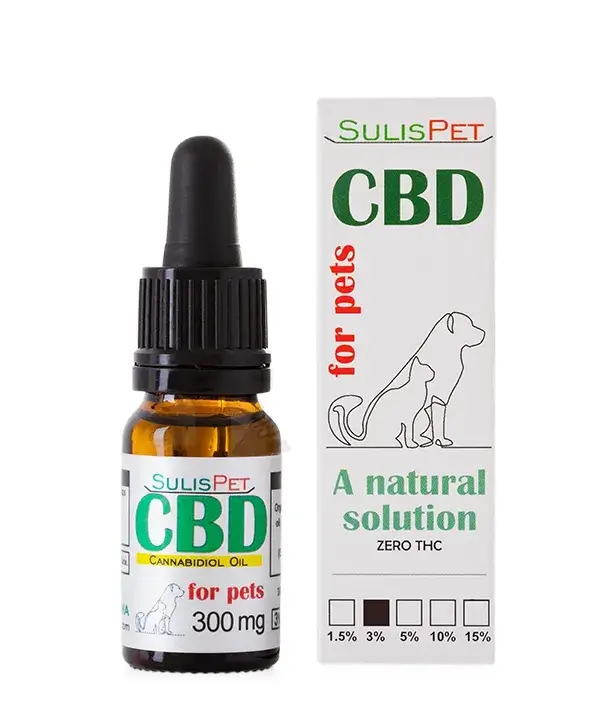
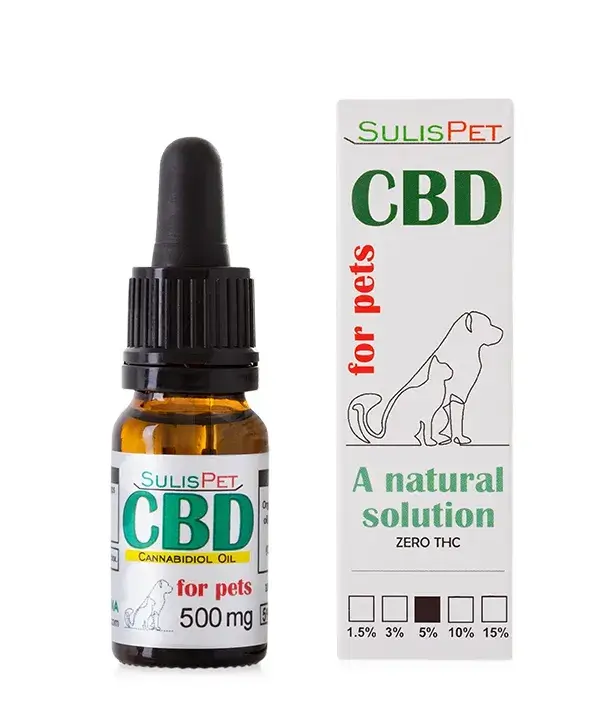
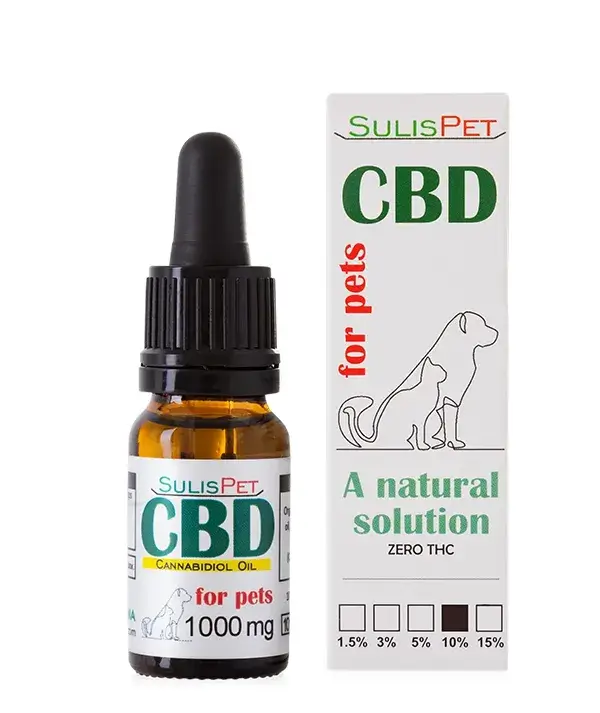
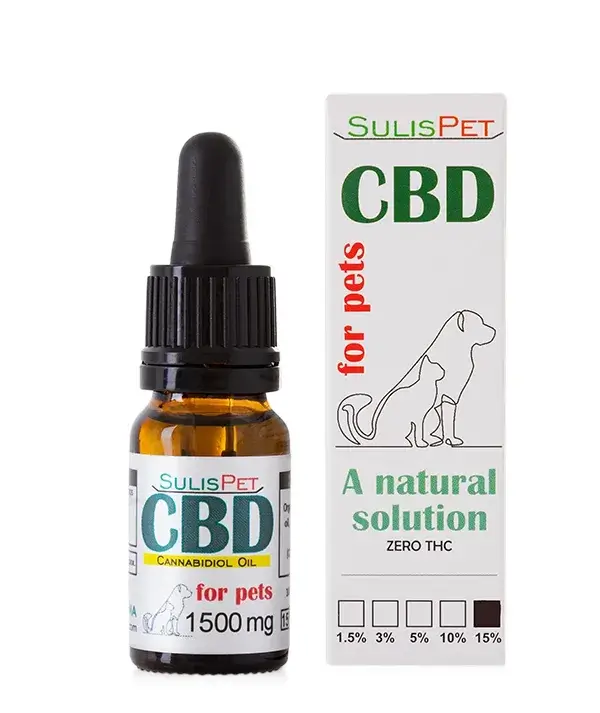
PET CBD Oil FAQ SulisPet - External Sources
- World Health Organization - CANNABIDIOL (CBD) Critical Review Report, Geneva 4-7 June 2018
- Scientific Validation of Cannabidiol for Management of Dog and Cat Diseases
- Pharmacokinetics of escalating single-dose administration of cannabidiol to cats
- Cannabinoid receptor type 1 and 2 expression in the skin of healthy dogs and dogs with atopic dermatitis
- The role of cannabinoids in pain modulation in companion animals
- Single-Dose Pharmacokinetics and Preliminary Safety Assessment with Use of CBD-Rich Hemp Nutraceutical in Healthy Dogs and Cats
- Up-regulation of CB2 receptors in reactive astrocytes in canine degenerative myelopathy, a disease model of amyotrophic lateral sclerosis
- The endocannabinoid system in canine Steroid-Responsive Meningitis-Arteritis and Intraspinal Spirocercosis
- Spatial distribution of cannabinoid receptor type 1 (CB1) in normal canine central and peripheral nervous system
- Localization of cannabinoid receptors CB1, CB2, GPR55, and PPARα in the canine gastrointestinal tract
- The Cannabis Terpenes
- Cannabinoids, Phenolics, Terpenes and Alkaloids of Cannabis
- Terpenes in Cannabis sativa - From plant genome to humans
- Analgesic Potential of Terpenes Derived from Cannabis sativa
- Pharmacokinetics, Safety, and Clinical Efficacy of Cannabidiol Treatment in Osteoarthritic Dogs
- Alterations of endocannabinoids in cerebrospinal fluid of dogs with epileptic seizure disorder
- Pharmacokinetics of cannabidiol in dogs
- A single dose of cannabidiol (CBD) positively influences measures of stress in dogs during separation and car travel.
- Hippocampal expression of the cannabinoid receptor type 1 in canine epilepsy.
- Long-term daily feeding of cannabidiol is well-tolerated by healthy dogs.
Disclaimer Pet CBD OIl FAQ: This content of Pet CBD OIl FAQ SulisPetis for educational purposes only. The information provided is derived from research gathered from external sources and internal research.